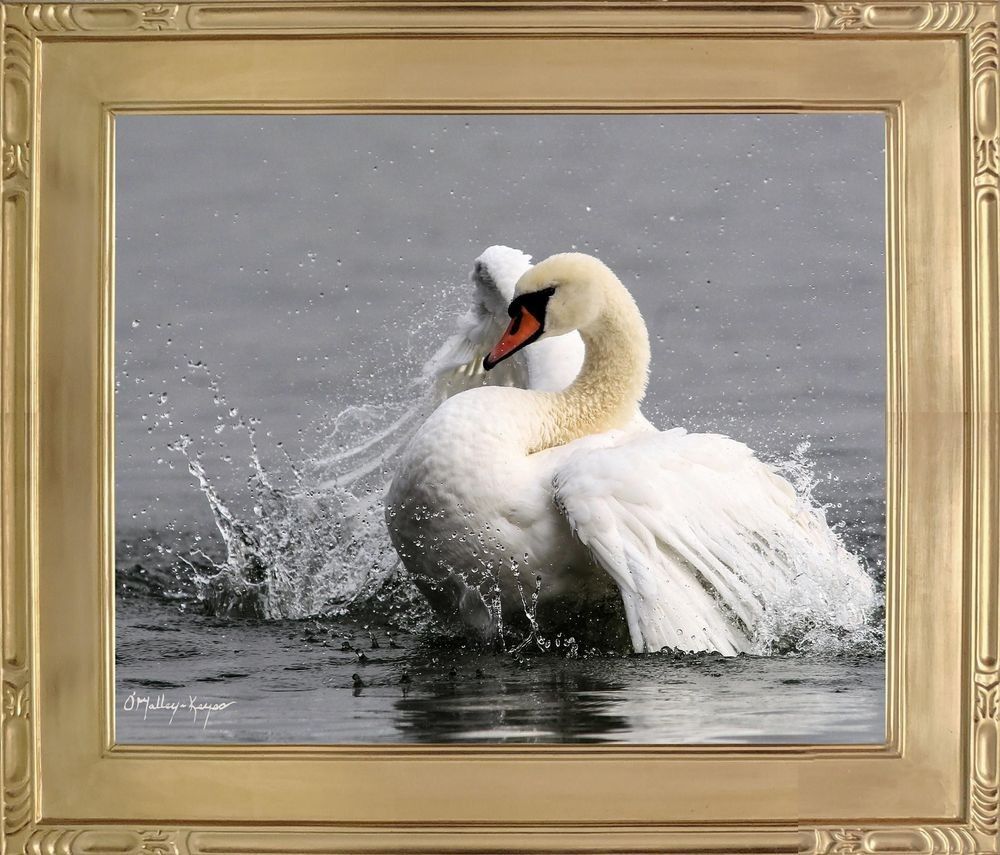
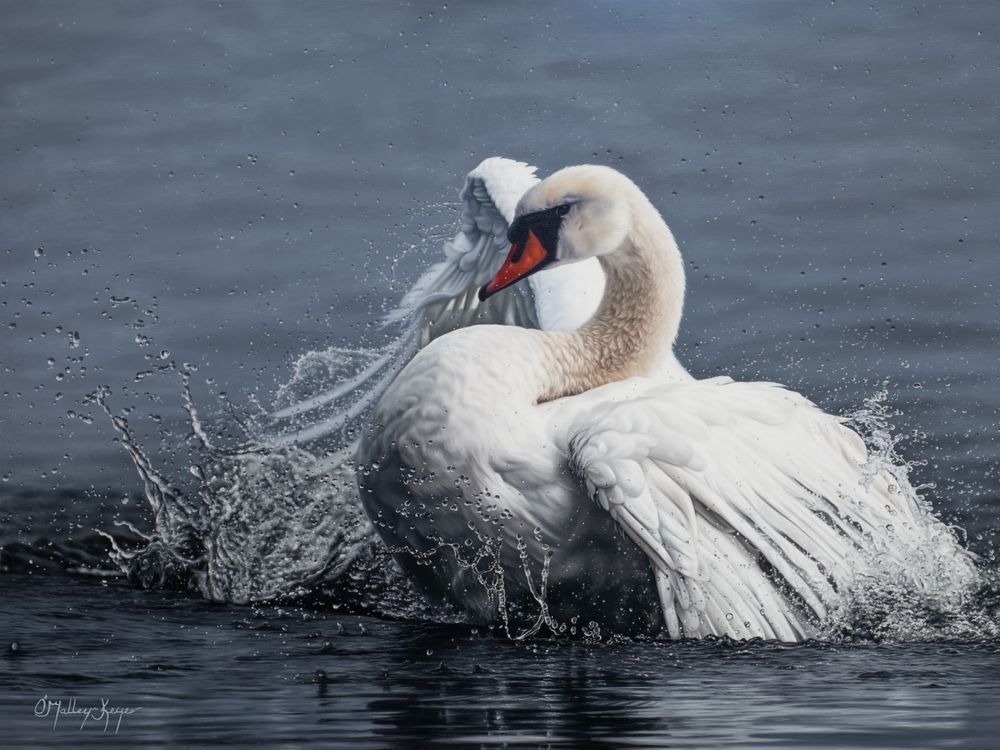
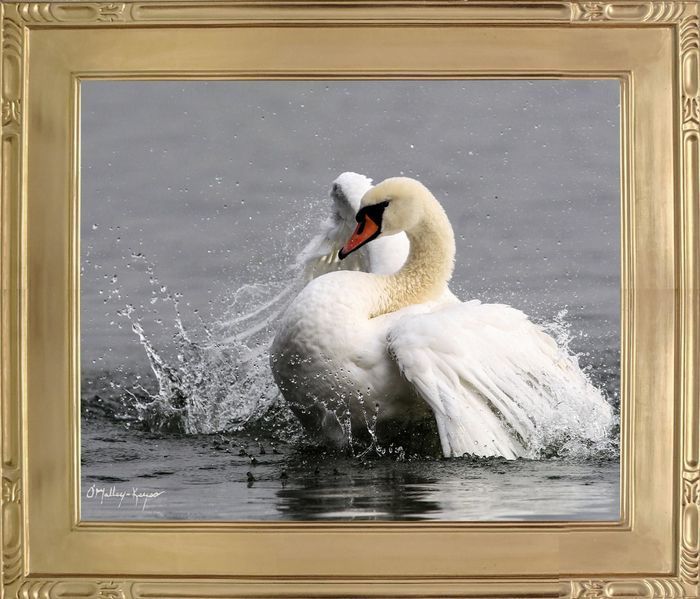
MUTE SWANS Mute swans are among the most graceful and admired birds in the world, often gliding elegantly across lakes and rivers. Their iconic white feathers, long necks, and orange bills with a distinctive black knob make them instantly recognizable. Despite being called "mute," these swans aren't completely silent—they can hiss, grunt, or make soft snorting sounds, especially when protecting their territory. Still, compared to other swans, they're relatively quiet, which adds to their calm and regal presence.
One of the most remarkable qualities of mute swans is their strong devotion to one another. These birds are famous for forming lifelong bonds with their partners. Once a pair of swans find each other, they typically remain together for life. This loyalty is not only touching to observe but also serves a practical purpose: a strong, committed pair is more successful at raising young and defending territory.
The courtship rituals of mute swans are gentle and endearing. Partners often mirror each other's movements, dip their heads in unison, and touch beaks in a way that looks like they’re forming a heart shape with their necks. These bonding displays aren't just for show—they help reinforce the emotional connection between the pair and coordinate them as a parenting team. Their unity is a powerful symbol of love and partnership in nature.
When it comes to raising cygnets, or baby swans, both parents are fully involved. The female (pen) typically incubates the eggs, while the male (cob) stands guard nearby, ready to defend the nest from any intruders. After the eggs hatch, the whole family can often be seen gliding together across the water, with the cygnets riding on a parent's back or paddling closely behind. It's a beautiful sight that showcases the swans’ nurturing instincts.